Author: SavorItalyTours

  • Best Bacari San Polo

    Best Bacari San Polo

    The Ultimate Guide to San Polo’s Best Bacari: A Venetian Wine Crawl

    By Tommy | Savor Italy Tours Founder & Venice Local

    A colorful plate of assorted Venetian cicchetti and crostini, essential for a traditional San Polo bacaro wine crawl.
    The ultimate giro d’ombra essential: a colorful mix of traditional Venetian cicchetti.

    If you want to understand the true soul of Venice, you have to leave the grand, crowded piazzas behind and lose yourself in the labyrinth of the San Polo district. Here, clustered around the ancient Rialto Market, you will find the lifeblood of Venetian culinary culture: the bacaro.

    A proper Venetian evening isn’t spent sitting down for a heavy three-course meal; it’s spent standing shoulder-to-shoulder with locals, balancing a small glass of wine (an ombra) in one hand and a bite-sized cicchetto in the other. This tradition is known as the giro d’ombra—the wine crawl.

    After over a decade of leading travelers through these narrow calli, we’ve learned exactly where to find the perfect pour and the crispiest fried bites. While we keep our absolute favorite neighborhood spots a closely guarded secret for our Venice food tour guests, here is a guide to the most famous San Polo bacari to get your evening started.


    1. Cantina Do Mori: The 15th-Century Legend

    Vibe: Dark, atmospheric, and fiercely traditional.

    Dating back to 1462, this is widely considered the oldest functioning wine bar in Venice. Skip the Aperol here and order a crisp Lugana or a robust Valpolicella to pair with their famous Francobolli—tiny, crustless sandwiches packed with savory fillings.

    ? Read our complete guide to Cantina Do Mori

    2. Cantina Do Spade: The Master of the Fryer

    Vibe: Warm, boisterous, and golden.

    Established in 1448, locals flock here for their mastery of hot, fried comfort food. You cannot leave without splitting a Mozzarella in Carrozza (fried bread stuffed with cheese) or their legendary fried olive sticks.

    ? Read our complete guide to Cantina Do Spade

    3. Al Mercà: The Al Fresco Favorite

    Vibe: Bustling, outdoor, and socially vibrant.

    Located right in Campo Bella Vienna near the Rialto Market, Al Mercà is essentially a hole in the wall where you order from the street and stand in the square. It boasts an impressive wine selection and is perfect for enjoying the open-air theater of Venetian street life.

    4. Bar All’Arco: The Busy Classic

    Vibe: Fast-paced, crowded, and heavily trafficked.

    If you’ve researched itineraries from large, international corporate operators, you will almost always see Bar All’Arco on their list. Located near the Rialto Bridge, it serves excellent crostini topped with fresh seafood. However, because it is the go-to stop for massive tour groups, be prepared to battle heavy crowds to get your glass of wine.

    5. Osteria Bancogiro: The Grand Canal View

    Vibe: Scenic, popular, and picturesque.

    Another staple of the big-name tourist routes, Bancogiro offers something rare for a bacaro: seating with a view of the Grand Canal. They offer a great selection of cicchetti and regional wines. It is undeniably beautiful, though you’ll be rubbing elbows with plenty of other international travelers following the standard guidebook routes.


    Navigate the San Polo District

    Use our interactive map below to orient yourself. These famous stops are all within a short walk of the Rialto Bridge.

    Skip the Tourist Traps

    Want to experience the ultimate giro d’ombra without getting stuck behind an umbrella-waving tour guide? Let us take you off the beaten path. Join Savor Italy Tours to discover the secret local spots we refuse to publish online.

    Book Your Authentic Venice Food Tour
  • Cantina Do Spade: Guide to Venice’s Historic Bacaro (Since 1448)

    Cantina Do Spade: Guide to Venice’s Historic Bacaro (Since 1448)

    The Casanova Connection: Discovering Cantina Do Spade (Since 1448)

    By Enzo| Savor Italy Tours & Venice Local

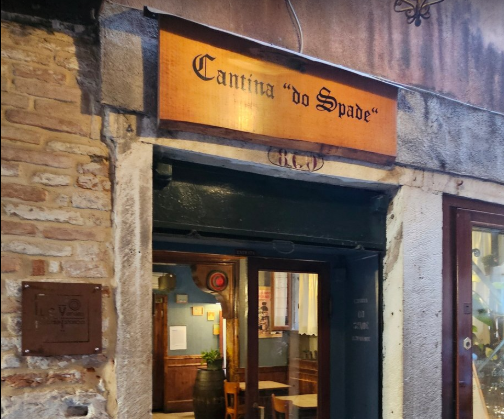
    Exterior entrance and wooden sign of Cantina do Spade, a historic bacaro and wine bar in Venice, Italy.
    The historic entrance to Cantina Do Spade in San Polo, welcoming thirsty Venetians since 1448.

    If Cantina Do Mori is the stoic grandfather of Venetian wine bars, Cantina Do Spade is its lively, boisterous sibling. Tucked away in a labyrinth of narrow alleyways just a stone’s throw from the Rialto Bridge, Do Spade has been serving thirsty Venetians since 1448—making it a strong contender for the oldest operating bacaro in the city.

    Legend has it that this historic tavern was a favorite haunt of Giacomo Casanova, who allegedly brought his conquests here for a glass of wine and a discreet bite. Today, it remains a pillar of the authentic Venetian food tour experience.

    The Vibe: Warm, Loud, and Golden

    Stepping into Do Spade feels like walking into a centuries-old secret. The dark wooden panels and rustic interiors are illuminated by the golden glow of the display case. Unlike some of the quieter, standing-only spots, Do Spade has a slightly more raucous, convivial energy, especially as the evening rolls in.

    What to Order: Masters of the Fryer

    While some bacari specialize in delicate crostini, Do Spade is universally beloved for its mastery of the fryer. This is the place to indulge in hot, savory comfort food alongside a cold glass of wine.

    Close up of Mozzarella in Carrozza, a traditional fried Venetian cicchetto with melted cheese and prosciutto, served at Cantina Do Spade in Venice
    The legendary Mozzarella in Carrozza—fried bread stuffed with gooey mozzarella and savory fillings.

    The Insider Order:

    • Mozzarella in Carrozza: This is a non-negotiable. A Venetian staple of fried bread stuffed with oozing mozzarella and anchovy or prosciutto. Pro tip: Grab one and split it in half with a friend so you have room to try more.
    • The “Stick” Selection: Do Spade is famous for its fried skewers. You absolutely must try the stuffed, fried olive sticks, alongside another skewer of your choice (the fried calamari or meatball skewers are phenomenal).
    • The Pairing: Wash the rich, fried flavors down with a crisp local Pinot Grigio or a bright, bubbly Prosecco.

    Finding Do Spade

    Navigating to Do Spade is part of the charm. It requires turning down the Calle Do Spade, a narrow passage that feels completely removed from the heavy foot traffic of the main tourist arteries.

    Taste the Real Venice

    Why wander the labyrinth alone? Savor Italy Tours has been leading guests to legendary spots like Do Spade for the perfect bite and the perfect pour for over 11 years. Skip the tourist traps and let us show you the true flavors of the city.

    Book Your Venice Food Tour
  • Cantina Do Mori: Guide to the Oldest Wine Bar in Venice

    Cantina Do Mori: Guide to the Oldest Wine Bar in Venice

    The Copper Pots of 1462: Inside Cantina Do Mori, the Living Heart of Venice

    By Tommy | Savor Italy Tours Founder & Venice Local

    In a city of 118 islands and nearly as many tourist traps, there is a narrow, dimly lit alleyway in San Polo where time has effectively been held at a standstill since the mid-15th century. To step through the heavy wooden doors of Cantina Do Mori is to abandon the Venice of cruise ships and enter the Venice of Casanova, spice merchants, and the city’s ancient Giro d’Ombra.

    Founded in 1462, Do Mori holds the undisputed title of the oldest bacaro (wine bar) in the Serenissima. But its value isn’t just in its age—it’s in its refusal to change.

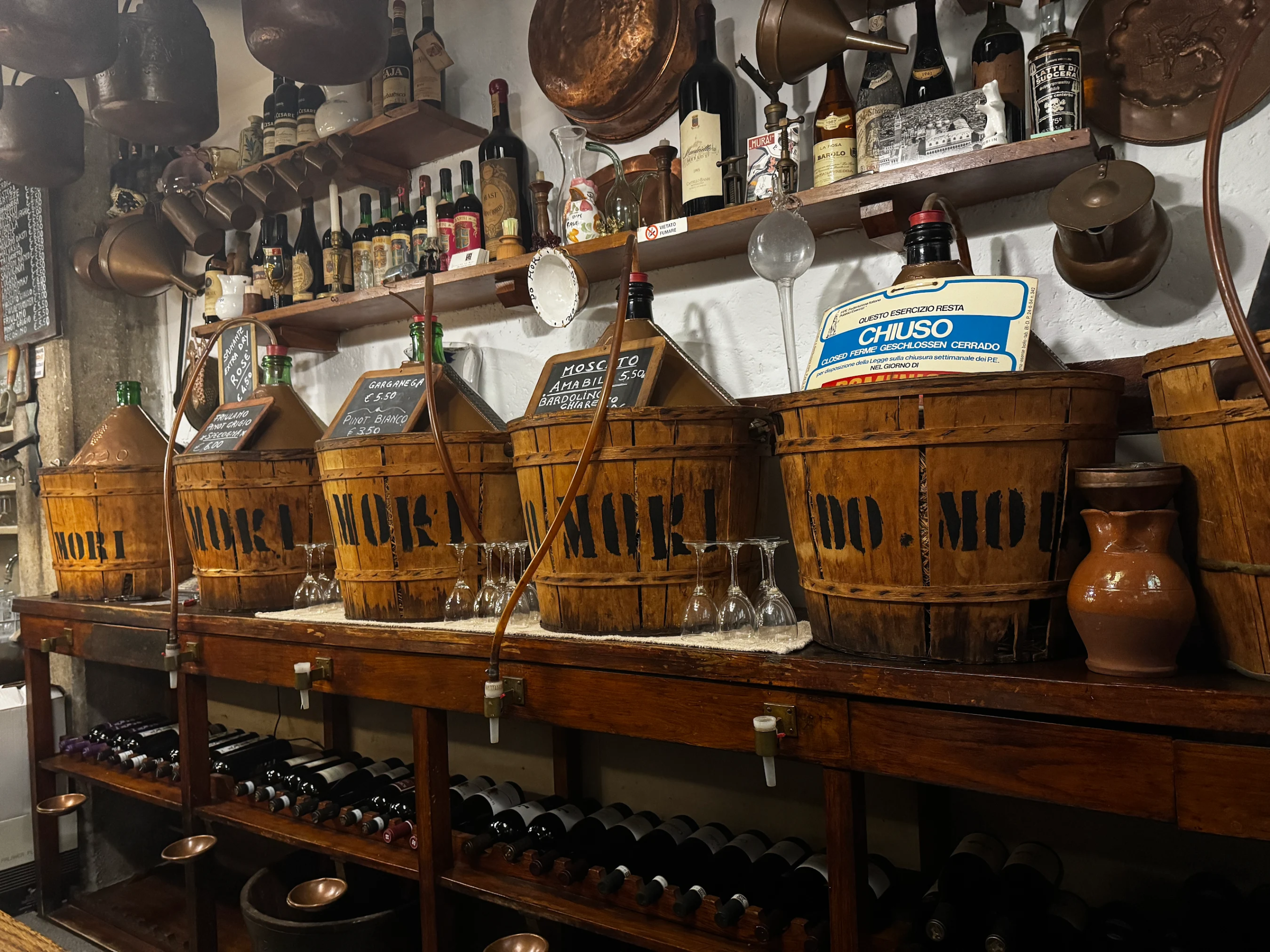
    Cantina Do Mori Venice oldest wine bar interior with copper pots and traditional cicchetti
    Standing room only: The historic counter at Cantina Do Mori.

    A Ceiling of History

    The first thing that hits you isn’t the smell of the wine, but the visual weight of the ceiling. Hundreds of blackened, historic copper water pots hang from the ancient rafters. In a bygone era, these were the vessels Venetians used to draw water from the city’s stone wells. Today, they serve as a silent audience to the clinking of glasses and the low hum of local Venetian dialect that fills the room.

    There is no Wi-Fi here. There are no chairs. Do Mori is a temple to the Ombra—the “shadow”—the traditional small glass of house wine named after the merchants who used to move their stalls to follow the cool shadow of the Campanile in St. Mark’s Square.

    Gastronomy in Miniature: The Art of the Francobolli

    While Venice is famous for cicchetti (tapas-style snacks), Do Mori’s specialty is the Francobolli. Translating literally to “postage stamps,” these are tiny, square, crustless sandwiches that are as delicate as they are flavorful. The tradition here is a masterclass in simplicity: a few Francobolli, a tramezzino sliced into triangles, and a “large bottle” of local wine shared among friends.

    How to Find the Heart of San Polo

    Cantina Do Mori is tucked away in a narrow calle. Use the map below to navigate from the Rialto Bridge—it’s only a 2-minute walk, but it feels like stepping back five centuries.

    Experience Venice Like a Local

    For 11 years, we’ve led travelers into the hidden bacari that most tourists walk right past. From wine crawls to cooking classes with bottomless Prosecco, let us show you the real Venice.

    Book Your Authentic Venice Tour

  • Venice Cooking Class – the Ultimate Souvenir

    Venice Cooking Class – the Ultimate Souvenir

    Ultimate Venice Cooking Class: Pasta, Tiramisu & Prosecco | Savor Italy Tours
    Venice Culinary Experiences

    Beyond the Gondola: Why a Venice Cooking Class is the Ultimate Travel Souvenir

    Published by Savor Italy Tours • Master Class Culinary Experiences

    Group of diverse guests laughing and cooking together in a luxurious, 12th-century Venetian cooking experience venue, hosted by Savor Italy Tours.
    The inspiring atmosphere of our restored 12th-century culinary venue.

    When planning a trip to the floating city, the itinerary usually writes itself: a gondola ride through the narrow canals, a walk across the Rialto Bridge, and a visit to St. Mark’s Basilica. But once the sightseeing is done, how do you truly connect with the heart of Venice, Italy?

    You head into the kitchen. But not just any kitchen—a meticulously restored 12th-century architectural gem that predates most Venetian palaces, located just a stone’s throw from St. Mark’s Square.

    At Savor Italy Tours, we believe that the best way to understand Venetian culture is to taste it. Unlike other experiences that rely on generic market wholesalers, our Venetian Secrets Cooking Class operates on a strict “zero-mile” philosophy. The primary produce and fresh eggs you use are sourced directly from a private family farm in the Venetian countryside, ensuring a level of exclusivity and freshness you won’t find anywhere else.

    Here is why swapping a museum ticket for an apron is the best decision you can make, and why a Venice cooking class is the ultimate souvenir to take back home.

    1. You Go From Tourist to Local Creator

    It is easy to sit at a restaurant and order a plate of pasta. It is an entirely different experience to step out of the dining room and master the tactile secrets of kneading and shaping fresh dough yourself.

    In our class, there is no watching from the sidelines—you will roll, stir, and craft your own dishes from scratch. Under the guidance of our established local chefs, you will learn the rhythm of a real Italian kitchen and the architecture of the perfect meal, transforming farm-fresh ingredients into a culinary masterpiece.

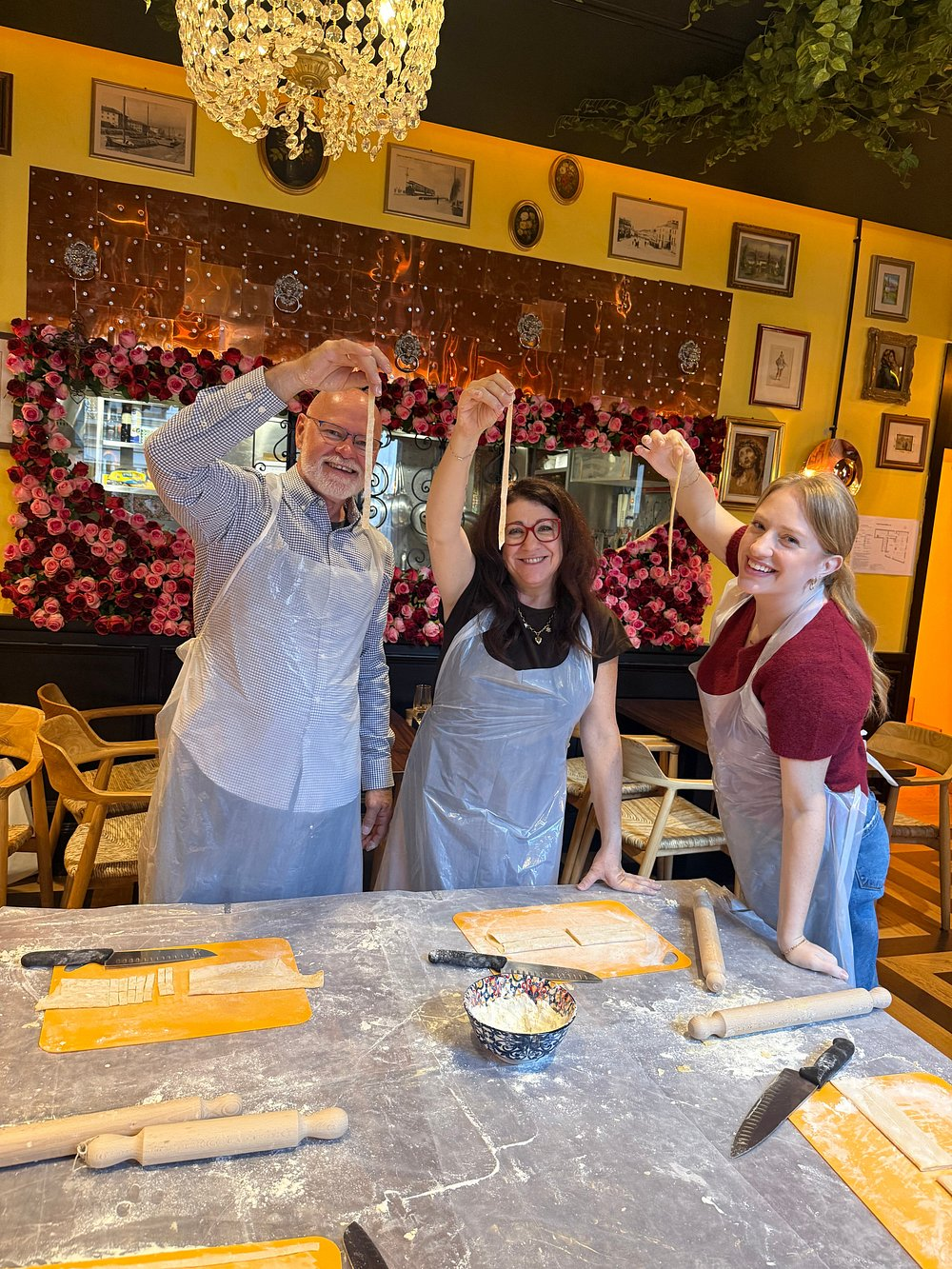
    A smiling guest holding up a tray of long, fresh handmade pasta they just rolled out during a Venice cooking class.
    The proud result of mastering the art of the pasta roller with farm-fresh eggs.

    2. A True 3-Course Authentic Menu

    The problem with buying a glass Murano vase is that it sits on a shelf. A recipe, however, is a living souvenir. During your experience, you will master authentic recipes passed down through generations. Your menu includes:

    • The Starter: A fresh, seasonal Venetian appetizer highlighting our “zero-mile” produce.
    • The Main Event: Freshly made pasta from scratch, paired with a famous local sauce.
    • The Finale: Authentic Italian Tiramisù, assembled using a proprietary method that perfectly balances texture and richness.

    3. The Magic Ingredient: Unlimited Prosecco

    A joyful group of guests laughing while holding glasses of Prosecco and interacting with an expert chef during a Savor Italy cooking class in Venice.
    Sipping Prosecco and making memories while we cook.

    Food brings people together, and there is a unique camaraderie that forms when a small group of travelers gather around a floured table.

    To keep the creative juices flowing, our class features a distinguishing mark of Venetian hospitality: Unlimited Prosecco during the cooking experience. For two full hours while you slice, stir, and roll, your glass will never be empty. You’ll sip free-flowing regional bubbles as you laugh, learn, and socialize with fellow travelers. (Please note: The unlimited Prosecco service concludes when the hands-on cooking portion finishes and we sit down to eat).

    4. The Grand Feast

    Once the flour settles, the class transforms into a lively dinner party.

    You will sit down in our historic venue to enjoy the delicious appetizer, pasta, and tiramisu you just created. There is an immense sense of pride in eating a meal you built from scratch. Paired with great conversation and pro-Venetian dining tips from your local hosts, it’s a dining experience that no traditional restaurant reservation can match.

    Frequently Asked Questions

    Where do we meet for the cooking class?

    You will meet your chef in the square at Campo San Gallo, conveniently located just steps away from St. Mark’s Square, before heading into our 12th-century venue.

    What languages is the class taught in?

    To ensure the nuances of Venetian cuisine are accessible to a global audience, we offer instruction in English, French, Italian, Spanish, Japanese, Korean, and Arabic. (For non-English classes, please book 24 hours in advance and specify in the “Special Requirement” field).

    Do I need prior cooking experience?

    Not at all! Our classes are designed for everyone. Our expert local instructors provide step-by-step technical instruction, ensuring your handmade pasta and tiramisu turn out perfectly.

    Ready to Tie On an Apron?

    A happy guest holding the finalized 3-course meal they created during the Venetian Secrets Cooking Class.

    If you are looking for the absolute best activities in Venice, look beyond the standard tourist trail. Leave with new take-home skills guaranteed to impress your friends and family.

    Check Availability for the Venetian Secrets Cooking Class
  • The Ultimate Guide to Venice After Dark: Pastries, Espresso & Artisan Gelato | Savor Italy Tours

    The Ultimate Guide to Venice After Dark: Pastries, Espresso & Artisan Gelato | Savor Italy Tours

    The Ultimate Guide to Venice After Dark: Pastries, Espresso, & Artisan Gelato

    Experience the authentic sweet side of Venice. A local’s guide by Savor Italy Tours.

    There is a side of Venice that most visitors miss—one that emerges only after the day-trippers have left the winding calli (streets) and the locals reclaim their city. While the setting sun over the Grand Canal is beautiful, the true flavor of Venice awakens in the twilight.

    A proper Venetian evening is carefully paced. It might kick off around 5:15 PM with a large bottle of wine and a fresh tramezzino at Do Mori, followed by a savory stop for half a mozzarella in carrozza and olive sticks at Do Spade, or a hearty plate of prawn and zucchini pasta at Nono. But once the savory cichetti are finished, it is time to embrace the ritual of the evening dolce run. Here is our insider’s guide to navigating the Venetian night, moving from exquisite pastries to late-night espresso and the city’s finest artisan gelato.

    Step 1: The Sunset Pastry Pick-Up at Targa or Dolcevita

    Before the night gets too late, a stop at a traditional pasticceria is a must. We love timing our pastry pick-ups right as the evening begins to cool down.

    Pasticceria Targa

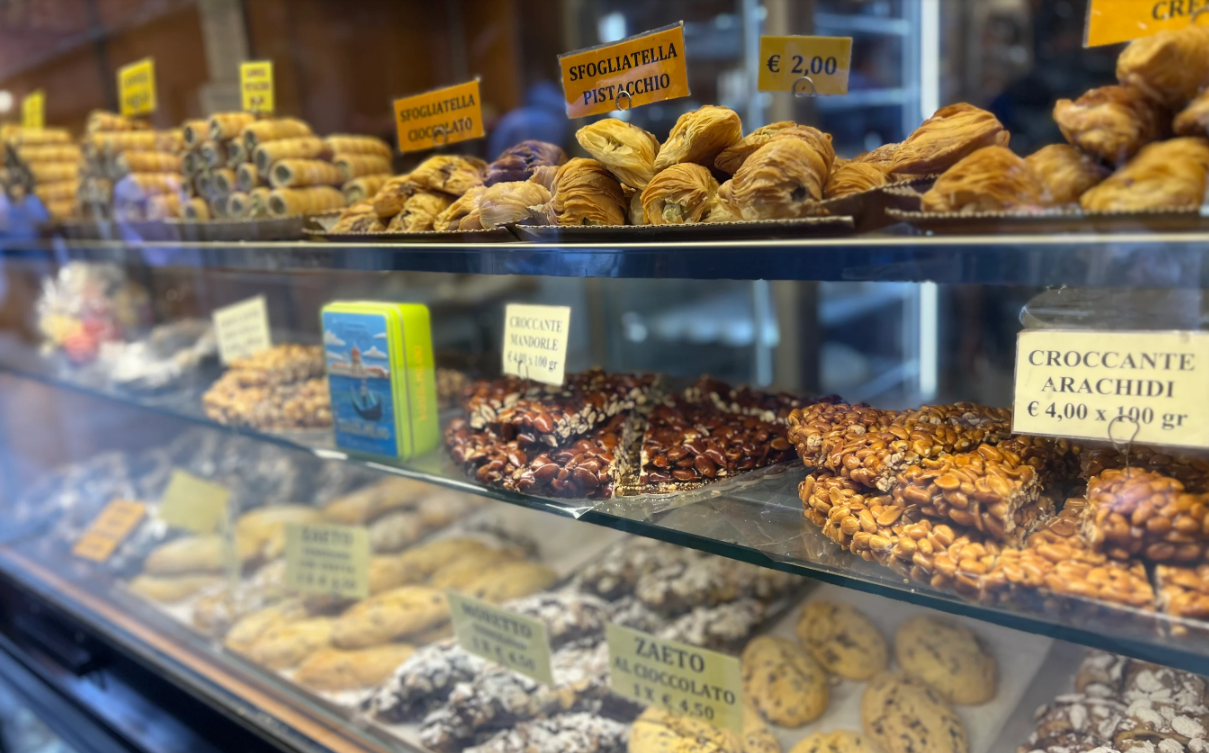
    Stepping into Targa is a dive into authentic local life. This neighborhood staple is an absolute favorite for a sweet evening interlude. The display cases are packed with classic Venetian dolci, from delicate cream-filled pastries to traditional zaeti. It’s the perfect sweet prelude to the night ahead.

    Display case of authentic Venetian pastries at Pasticceria Targa in Venice
    Freshly baked Venetian treats at Pasticceria Targa.
    Close-up of traditional Italian sweets and pastries at Targa, Venice
    A selection of the evening’s best pastries.
    Delicious cream-filled pastries available for an evening dessert run at Targa
    Perfectly crafted sweets to kick off the night.

    Pasticceria Dolcevita

    If your evening takes you to a different sestiere, Dolcevita is another impeccable choice. Known for their high-quality, artisanal baking, this is the place to indulge in a perfectly flaky cornetto filled with rich pistachio cream.

    Step 2: The Late-Night Espresso at Boresco

    As the evening progresses—perhaps after a quick stop at Acqua e Mais or splitting a couple bottles of wine at Bischeri—you’ll notice a shift in the local routine. It’s time for coffee. Forget the misconception that espresso is strictly for the morning. For Italians, a post-dinner espresso is essential for digestion and provides the energy needed to keep the evening going.

    When we want an authentic coffee experience, we head straight to Boresco. This spot is where true Venetians get their fix. Join the queue, order an espresso for everyone in your group, and drink it standing at the counter. The intense, rich brew, paired with a small bite of pastry, provides the perfect, sharp counterpoint to the wine you’ve already enjoyed.

    Late-night espresso and pastry pairing at Boresco in Venice
    The essential Venetian evening espresso and pastry at Boresco.

    Step 3: The Artisan Finale at Gelateria Alaska

    You simply cannot end a food tour of Venice without gelato. However, in a city filled with brightly colored, tourist-targeted gelato “mountains,” finding the real artisanal scoop requires local knowledge.

    Your final stop of the night must be Gelateria Alaska. Run by the passionate and deeply creative Carlo, this unassuming shop is a local legend. Alaska is famous for using 100% natural ingredients and churning out highly inventive flavors that change with the seasons. Depending on the day, you might find flavors like celery, ginger, or even artichoke. A scoop of Carlo’s ginger gelato is the exact sharp, clean finish that the ultimate Venetian evening demands.

    Artisan gelato scoops at Gelateria Alaska in Venice
    Creative, natural gelato flavors at the legendary Gelateria Alaska.

    Experience the Real Taste of Italy with Savor Italy Tours

    Navigating the hidden bakeries, roasteries, and gelaterias of Venice is an art form. If you want to taste the city exactly how the locals do—complete with hidden wine stops, the best cichetti in town, and perfectly timed pastry pick-ups—let us lead the way.

    Explore our Venice Food & Wine Tours to join us for an unforgettable evening of eating, drinking, and discovering the authentic heart of Venice.

  • Regional Italian Cuisine: A 10-Day Food Itinerary

    Regional Italian Cuisine: A 10-Day Food Itinerary


    Italy is a patchwork of 20 distinct culinary micro-climates. From the butter-rich dishes of the Alpine north to the spice-infused seafood of the Mediterranean south, every region tells a story through its flavors.

    If you are planning an Italy 10-day itinerary, navigating these tastes can be overwhelming. This guide uncovers the must-eat delicacies across five iconic regions to help you eat like a local on your next adventure.


    1. Tuscany: The Heart of Rustic Renaissance

    Tuscany is synonymous with rolling cypress hills and the artistic soul of Florence. But for food lovers, it’s the Cucina Povera (peasant cooking) that shines. Here, simplicity is an art form.

    Panoramic view of the medieval city of Siena, Tuscany, featuring the Siena Cathedral (Duomo) and historic terracotta rooftops under a blue sky.
    • Signature Dishes: Bistecca alla Fiorentina (massive T-bone steak from Chianina cattle) and Pappa al Pomodoro (thick bread and tomato soup).

    • The Pasta: While egg pasta is common, try Pici—a thick, hand-rolled spaghetti typical of Siena.

    • The Wine: You are in the land of Sangiovese. Don’t leave without tasting a Brunello di Montalcino or a classic Chianti Classico.

    ? Pro Tip: Authentic Tuscan bread is made without salt (pane sciocco). It is designed perfectly to balance the salty, savory flavors of Tuscan prosciutto and wild boar ragù. It might taste “plain” on its own, but it’s essential for the local palate!


    2. Veneto: Seafood, Cicchetti, and Sparkling Wine

    Home to the floating city of Venice, the Veneto region offers a dramatic shift in flavors. Because of its history as a trading hub, you’ll find influences ranging from Middle Eastern spices to fresh Adriatic catches.

    • The Venice Experience: Locals don’t just “eat dinner”—they go for Cicchetti. These are small plates (Venetian tapas) served in traditional wine bars called Bacari.

    • Must-Try: Sarde in Saor (sweet and sour sardines) and Risotto al Nero di Seppia (squid ink risotto).

    • Sweet Ending: Veneto is the proud birthplace of Tiramisu. Pair it with a crisp glass of Prosecco from the nearby Valdobbiadene hills.

    ? Pro Tip: When visiting a Venetian Bacaro, look for the “Ombra” on the menu—it’s a tiny, inexpensive glass of local wine. The name comes from the old practice of wine merchants following the “shadow” (ombra) of St. Mark’s Campanile to keep their wine cool.


    3. Piedmont: The Land of Truffles and Chocolate

    Nestled at the foot of the Alps, Piedmont (Piemonte) is Italy’s elegant, indulgent kitchen. If you love rich, buttery flavors and world-class reds, this is your destination.

    • The “White Gold”: Piedmont is famous for Alba White Truffles. During the autumn, these are shaved over everything from fried eggs to Tajarin (a rich, yolk-heavy pasta).

    • Decadent Dips: Try Bagna Cauda, a “hot bath” of garlic and anchovies, or Fonduta, a local take on cheese fondue using Fontina and egg yolks.

    • The King of Wines: This region produces Barolo and Barbaresco, often called the “King and Queen” of Italian wine.

    ? Pro Tip: If you visit Turin, you must try Bicerin. It’s a historic layered drink made of espresso, chocolate, and heavy cream. Important: Don’t stir it! The magic is in the temperature contrast of the hot coffee and cold cream as you sip.


    4. Puglia: The Mediterranean’s Garden

    Down in the “heel” of Italy’s boot, Puglia provides a sun-drenched, vegetable-forward cuisine. With more olive oil produced here than anywhere else in Italy, the food is vibrant and healthy.

    • Handmade Shapes: You cannot visit Puglia without eating Orecchiette (“little ears”). They are traditionally served with cime di rapa (broccoli rabe), garlic, and a hint of chili.

    • Creamy Delights: This is the home of Burrata. Break open the outer shell of mozzarella to find a center of stracciatella cream that pairs perfectly with Pugliese sourdough bread.

    • Coastal Flavors: In Bari, head to the harbor for Crudo (raw seafood) caught fresh that morning.

    ? Pro Tip: Puglia is famous for its Fornello Pronto. These are butcher shops that have a grill in the back. You pick your meat—like Bombette (meat rolls stuffed with cheese)—and they grill it for you on the spot to eat with a glass of Primitivo wine.


    5. Sicily: A Melting Pot of Flavors

    Sicily is an island shaped by centuries of conquest. Greeks, Romans, Arabs, and Spaniards have all left their mark on the Sicilian kitchen, resulting in a cuisine that is uniquely bold and aromatic.

    • Street Food Kings: Try Arancini (fried rice balls) and Panelle (chickpea fritters).

    • Agrodolce: Many dishes feature a “sweet and sour” profile, like Caponata (eggplant stew with raisins and capers).

    • The Holy Grail of Pastry: Cannoli are a way of life here. Ensure yours is filled with fresh sheep’s milk ricotta only after you order it to keep the shell crunchy.


    Plan Your Ultimate Food Tour

    Exploring Italy in 10 days is a whirlwind, but focusing on the food ensures you connect with the heart of each city.

    Want to skip the tourist traps and eat where the locals go? At Savor Italy Tours, we lead intimate food and wine walks through the hidden backstreets of Venice and Rome. Join our expert guides to taste the history of these incredible regions firsthand.

    [Book Your Venice Food Tour]

    A group of people sitting at a long wooden table in a rustic, brick-walled Italian restaurant. A female tour guide is standing and gesturing while the group enjoys wine and conversation during a food tour.

Chat with Savor Italy